
Admissions Open
Choosing a school is never just a logistics decision. It’s a decision about who your child gets to become.
Frequently Asked Questions
Common questions from families considering GD Goenka Global School.
- Continuum of International Education (3 – 19 years)
- Encourages International-Mindedness and Diversity
- Encourages critical thinking for learning
- Students get to learn more than one language
- Opinion-sharing and discussions are the cornerstone for the process of delivery
- Number of schools offering IB programmes On 3 September 2019, there were 6,812 programmes being offered worldwide, across 5,175 schools in 157 countries.
- High quality reputation of over 45 years
It is, and well beyond India too. Cambridge is recognised by universities and educational institutions across the world, which is exactly why so many students move on to Cambridge IGCSE, the IB Diploma, CBSE, ISC, or other national and international curricula once Lower Secondary is done.
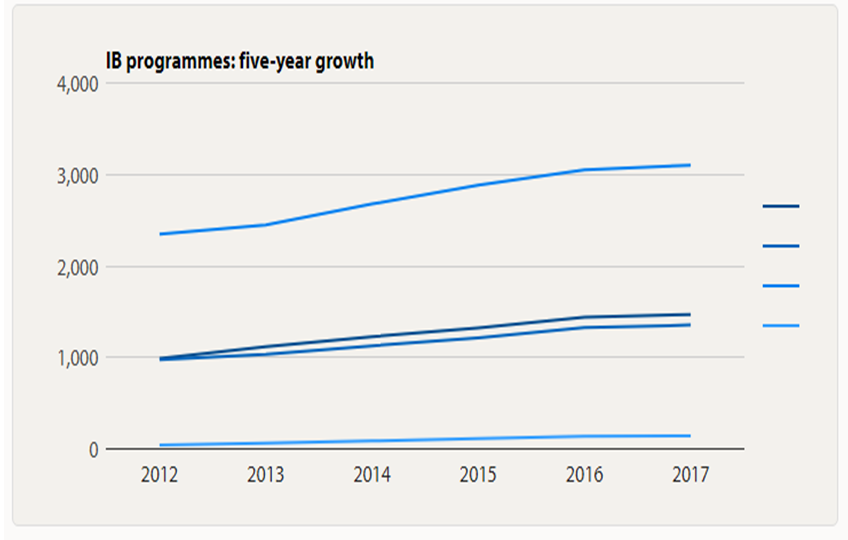
Between 2012-2017, the number of IB Programmes Offered worldwide has grown by 39.3%
- Circular Thinking
- Balanced Programme
- Recognised Worldwide
- Are an All rounder
- Able to Multitask
- Up for The Challenge
- Are creative & Inquisitive
- Child-centric education
- Small classrooms versus classroom with 35-40 students
- Differentiated learning
- Curriculum is mapped to the local curricula
- Inquiry based learning versus rote learning
- Integrated curriculum
- Holistic
- Being Internationally minded
- Believe in Action
- World Class Infrastructure
- Specialist activities i.e skating, basket ball,Taekwondo, dance, drama, music, mindfulness, kidfit, Visual Art and ICT.
- Indoor sports arena- Ball Pool, table tennis, billiards, chess, automated cricket pitch
- Auditorium
- Stem Lab
- Digital Library
- Wi-Fi-enable Campus
- Transport Available
- Meal Plans Available
- University of Mumbai
- University of Delhi
- NIMNAS
- University of Pune
- Christ University
- Ashoka University
- Manipal University
- VIT University
- Design colleges-NIFT, NID, Shristi Institute of Art, Design and Technology, Indian school of design and innovation etc.
- Entrance exams
- All medicine, engineering, architecture etc
In most cases, yes. Cambridge Lower Secondary is built around strong conceptual understanding, not just content, so students tend to transition into CBSE or other curricula without much difficulty if that’s ever needed. Schools typically run a short assessment first, just to work out the right placement.
Assessment here isn’t a once-a-term event, it’s continuous and genuinely holistic. That includes:
- Class activities
- Projects
- Presentations
- Investigations
- Quizzes
- Practical work
- Written assessments
- Student reflections
In Grade 8, schools may also bring in the Cambridge Checkpoint assessment alongside all of this.
It’s an optional international assessment taken at the end of Grade 8, and its real value is the feedback, a detailed picture of where a student is strong and where they still need work, specifically in English, Mathematics, and Science.
Not at all. Equal importance goes to:
- Leadership
- Communication
- Creativity
- Collaboration
- Well-being
- Community service
- Global citizenship
- Digital literacy
The goal is a student who’s academically strong and genuinely equipped with life skills, not one without the other.
Students typically study:
- English
- Mathematics
- Science
- Global Perspectives
- Humanities
- Hindi or a Foreign Language
- Computing and Digital Literacy
- Art and Design
- Music
- Physical Education
Individual schools may add further subjects beyond this list, based on their own curriculum.
It’s one of the more unusual subjects on that list. Instead of a textbook, students get handed real-world issues, sustainability, technology, health, culture, globalisation, and work through them via actual projects and presentations, picking up research, collaboration, communication, and critical thinking along the way rather than being taught it directly.
Quite a lot, by design. Students learn through:
- Experiments
- STEM activities
- Group discussions
- Projects
- Research
- Field visits
- Case studies
- Presentations
- Collaborative learning
Put simply, learning here is active rather than passive.
Because it’s built for more than exams. A child tends to come out of it curious rather than just informed, more confident, more resilient, and still genuinely enjoying learning, all while the academic groundwork underneath stays solid enough to carry them into higher education and whatever comes after.
At GD Goenka Global School specifically, the Cambridge curriculum gets layered with:
- Inquiry-based and experiential learning
- STEM integration
- Leadership opportunities through the student council
- Cambridge Global Perspectives projects
- International-mindedness and global awareness
- Social-emotional learning and well-being initiatives
- Community engagement and service learning
- A safe, inclusive, and nurturing environment where every child is encouraged to thrive academically and personally
The difference shows up in what actually gets developed. Beyond academic knowledge, Cambridge builds critical thinking, inquiry and research skills, communication, collaboration, creativity, independent learning, and problem-solving, and students are pushed to ask questions and apply what they learn to real situations, not just recall it for an exam.
Genuinely, yes. Plenty of schools across India run Cambridge programmes successfully, and students still engage with local and national context where it’s relevant, alongside a globally benchmarked education.
It does, though not by leaning on memorisation. Cambridge builds the conceptual understanding and higher-order thinking that competitive exams actually reward, students learn to understand concepts deeply, apply knowledge, analyse information, and solve problems with real confidence.
By building the knowledge, skills, and attitudes that a genuinely unpredictable job market will ask for. Beyond the academics, the programme develops qualities that matter well past school, the kind employers and universities both tend to notice.
Ready to Begin?
Admissions are open from Mom & Me through Grade 8. We’d genuinely love to have you visit the campus.
